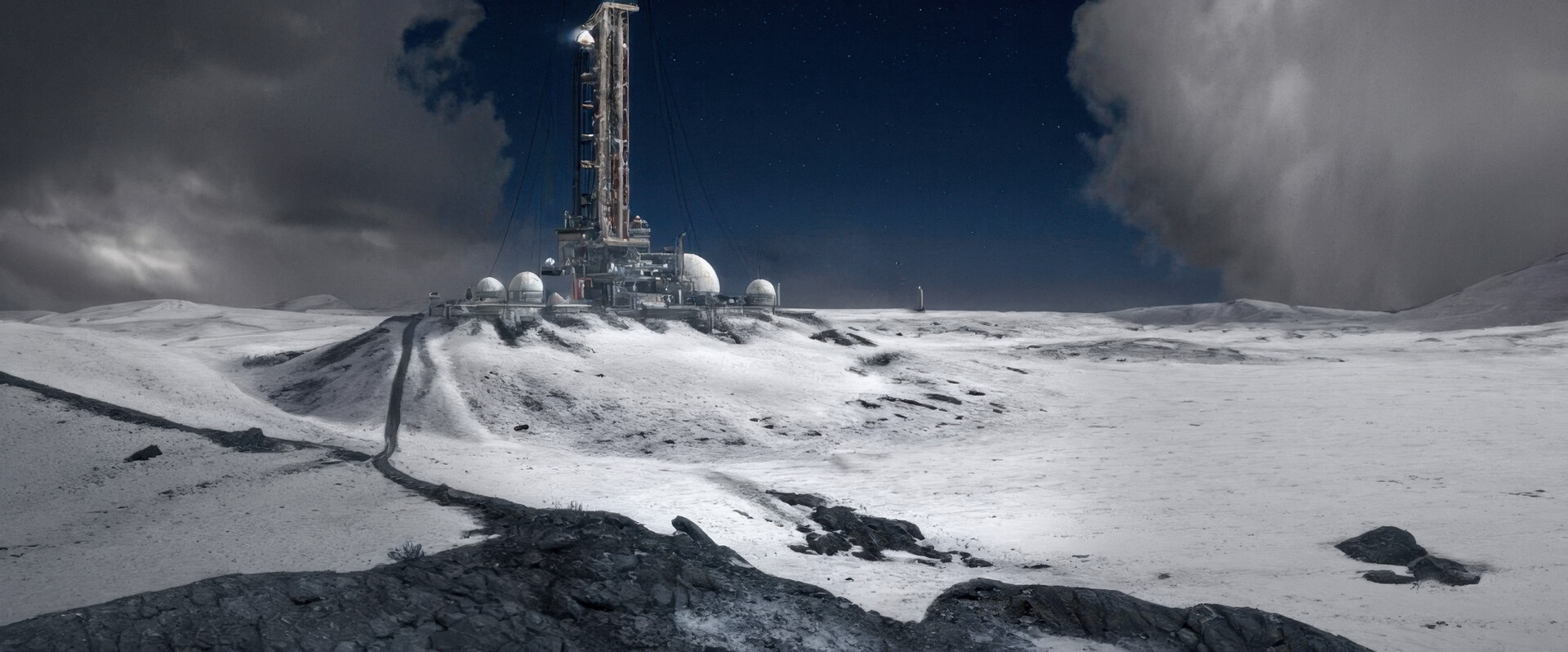
Introduction
Space exploration has captivated humanity’s imagination for centuries, evolving from myth and speculation into a rigorous scientific endeavor. As we stand on the brink of a new era in space exploration, the technological advancements and scientific discoveries achieved thus far provide a foundation for future endeavors. This article delves into the multifaceted aspects of space exploration, including its historical context, technological innovations, potential applications, challenges faced, and future prospects.
Historical Context
The journey of space exploration began with early astronomical observations and theories about celestial bodies. The launch of Sputnik 1 by the Soviet Union in 1957 marked the dawn of the space age, leading to a series of missions that expanded our understanding of the cosmos. The Apollo program, culminating in the moon landing of Apollo 11 in 1969, showcased human ingenuity and ambition. Since then, various missions have explored planets, moons, and asteroids, providing invaluable data about our solar system and beyond.
Technological Innovations
Launch Vehicles
The backbone of space exploration is the launch vehicle, which propels spacecraft beyond Earth’s atmosphere. Notable examples include:
- Space Launch System (SLS): NASA’s SLS is designed to carry astronauts and cargo to deep space destinations, including Mars. With a lift capacity of over 130 metric tons, it is one of the most powerful rockets ever built (NASA, 2021).
- Falcon Heavy: Developed by SpaceX, this reusable rocket can lift 64 metric tons to low Earth orbit, significantly reducing the cost of access to space (SpaceX, 2023).
Spacecraft
Spacecraft are engineered to withstand the harsh conditions of space. Key innovations include:
- Mars Rovers: Rovers like Perseverance and Curiosity are equipped with advanced scientific instruments, enabling them to analyze soil, rocks, and atmospheric conditions on Mars (NASA, 2021).
- Interplanetary Probes: Missions such as Voyager 1 and 2 have provided unprecedented data about the outer planets and are now venturing into interstellar space (NASA, 2021).
Communication Systems
Effective communication is vital for mission success. Technologies such as:
- Deep Space Network (DSN): This global network of antennas supports interplanetary missions by providing continuous communication with spacecraft (NASA, 2021).
- Laser Communication: Emerging technologies utilize laser beams for high-bandwidth data transmission, promising faster communication with distant spacecraft (NASA, 2021).
Potential Applications
The applications of space exploration extend beyond mere curiosity. They include:
- Scientific Research: Understanding planetary formation, climate change, and the potential for life beyond Earth.
- Resource Utilization: Mining asteroids for rare minerals and utilizing lunar resources for fuel and construction materials (NASA, 2021).
- Technological Advancements: Innovations developed for space missions often find applications on Earth, such as advancements in materials science, robotics, and telecommunications.
Challenges
Despite the progress made, space exploration faces numerous challenges:
Financial Constraints
Space missions require substantial funding, often leading to competition for government budgets and private investment. The cost of developing and launching missions can reach billions of dollars, necessitating careful planning and prioritization (NASA, 2021).
Technical Hurdles
The harsh environment of space presents significant technical challenges, including:
- Radiation Exposure: Spacecraft and astronauts must be protected from cosmic radiation, which can pose health risks and damage electronic systems (NASA, 2021).
- Life Support Systems: Developing sustainable life support systems for long-duration missions, such as those to Mars, is critical for human exploration (NASA, 2021).
International Collaboration
Space exploration often requires collaboration among nations. Political tensions and differing priorities can hinder cooperative efforts, as seen in the complexities of international space treaties and agreements (United Nations Office for Outer Space Affairs, 2021).
Future Prospects
The future of space exploration is promising, with several key initiatives on the horizon:
Human Missions to Mars
NASA’s Artemis program aims to return humans to the Moon by 2024, serving as a stepping stone for future manned missions to Mars. The goal is to establish a sustainable human presence on the Moon by the end of the decade, paving the way for Mars exploration in the 2030s (NASA, 2021).
Commercial Spaceflight
The rise of private companies in space exploration, such as SpaceX, Blue Origin, and Virgin Galactic, is revolutionizing access to space. These companies are developing reusable launch systems and commercial space tourism, making space more accessible to the public (SpaceX, 2023).
Interstellar Exploration
While still in the conceptual phase, missions like the Breakthrough Starshot initiative aim to send small, light-propelled spacecraft to nearby star systems, potentially revolutionizing our understanding of the universe (Breakthrough Initiatives, 2021).
The Frontier Metaphor: Discovery and Expansion
A persistent interpretation of space exploration in science fiction is the frontier metaphor—the idea that humanity’s expansion into space mirrors historic terrestrial exploration. This metaphor is visible in early works such as Jules Verne’s From the Earth to the Moon (1865), which imagines technological advancement as a natural extension of human ingenuity. Later, pulp-era stories like E.E. “Doc” Smith’s Lensman series (1934–1954) depict interstellar travel as both adventure and destiny for humankind.
In these narratives, space serves as a canvas for progress, manifest destiny, and the pursuit of knowledge. The frontier becomes a site of both possibility and conflict, shaping stories that reflect contemporary geopolitical or scientific anxieties.
Key implications of the frontier motif include:
- The drive for discovery and the celebration of exploration
- Encounter with the unknown as both wonder and threat
- Expansion as a metaphor for human evolution or conquest
Example works:
- Verne, From the Earth to the Moon
- Smith, Galactic Patrol
Humanity Confronting the Unknown
Space exploration also functions as a philosophical lens through which authors examine humanity’s place in the universe. Hard science fiction, such as Arthur C. Clarke’s 2001: A Space Odyssey (1968), situates exploration within a framework of cosmic evolution and transcendence. In Clarke’s work, the journey into deep space is not merely physical but metaphysical—an encounter with higher intelligence and deeper purpose.
Similarly, Stanisław Lem’s Solaris (1961) portrays exploration as a confrontation with the limits of human cognition. Rather than discovering new worlds that yield to human understanding, explorers encounter phenomena that remain fundamentally alien.
Themes emerging from this use of exploration include:
- Epistemological limits of science
- The alien as mirror of human psyche
- Cosmic indifference
Example works:
- Clarke, 2001: A Space Odyssey
- Lem, Solaris
Technological Possibility and Ethical Consequence
As science fiction developed alongside real-world space programs, authors began interrogating the ethical and technological dimensions of venturing into space. Works such as Kim Stanley Robinson’s Mars trilogy (1992–1996) depict exploration as a socio-political act, where technological progress intersects with environmental stewardship and collective governance.
In more dystopian visions—seen in films like Interstellar (2014) and novels such as Alastair Reynolds’ Revelation Space (2000)—exploration becomes a necessity for survival rather than a pursuit of glory. The motif thus shifts from celebratory futurism to critical inquiry into the sustainability of human civilization.
Common ethical considerations include:
- Terraforming vs. ecological preservation
- Resource exploitation and colonialism
- AI and automation in exploration
- Risk, sacrifice, and human cost
Example works:
- Robinson, Red Mars
- Reynolds, Revelation Space
Space Exploration as Existential Reflection
Beyond science and politics, space exploration often serves as a catalyst for introspective narratives. By removing characters from Earth, authors force them into environments where conventional social structures break down. Isolation, confinement, and psychological strain become central themes, explored in works such as:
- The Martian by Andy Weir (2011), emphasizing resilience and ingenuity
- Ad Astra (2019), focusing on emotional distance and familial legacy
- Ursula K. Le Guin’s The Left Hand of Darkness (1969), where space travel enables cultural displacement and reflection
Here, exploration functions as a mirror through which characters—and by extension, audiences—examine identity, belonging, and human purpose.
Conclusion
Space exploration stands at the intersection of scientific ambition and imaginative inquiry, embodying both humanity’s drive to understand the universe and its need to reflect on itself. As technological innovation and international collaboration push exploration beyond Earth’s limits, the discoveries achieved not only expand scientific knowledge and benefit life on our planet, but also echo the enduring role of space in science fiction—as a narrative arena for confronting aspiration, uncertainty, and the infinite. Together, real-world exploration and its speculative reflections reveal space as both a frontier of progress and a mirror for humanity’s deepest questions about its future and place in the cosmos.
Bibliography
Space Programs, Technology, and Policy
- Breakthrough Initiatives. (2021). Breakthrough Starshot. https://breakthroughinitiatives.org
- NASA. (2021). Artemis: The Next Steps to the Moon. https://www.nasa.gov/artemis
- NASA. (2021). Mars Exploration Program. https://mars.nasa.gov
- NASA. (2021). Deep Space Network. https://www.nasa.gov/mission_pages/dsn/index.html
- SpaceX. (2023). Falcon Heavy. https://www.spacex.com
- United Nations Office for Outer Space Affairs. (2021). The Outer Space Treaty. https://www.unoosa.org
Science Fiction Literature
- Clarke, A. C. (1968). 2001: A Space Odyssey. New American Library.
- Lem, S. (1961). Solaris. Wydawnictwo Literackie.
- Le Guin, U. K. (1969). The Left Hand of Darkness. Ace Books.
- Reynolds, A. (2000). Revelation Space. Gollancz.
- Robinson, K. S. (1992). Red Mars. Bantam Books.
- Smith, E. E. “Doc.” (1950). Galactic Patrol. Fantasy Press.
- Verne, J. (1865). From the Earth to the Moon.
Visual / Cultural Reference
- Méndez, A. (2025). Lunar Research Station – V. 21 June 2025, digital art, ArtStation. https://www.artstation.com/artwork/YGVBbK
Leave a Reply