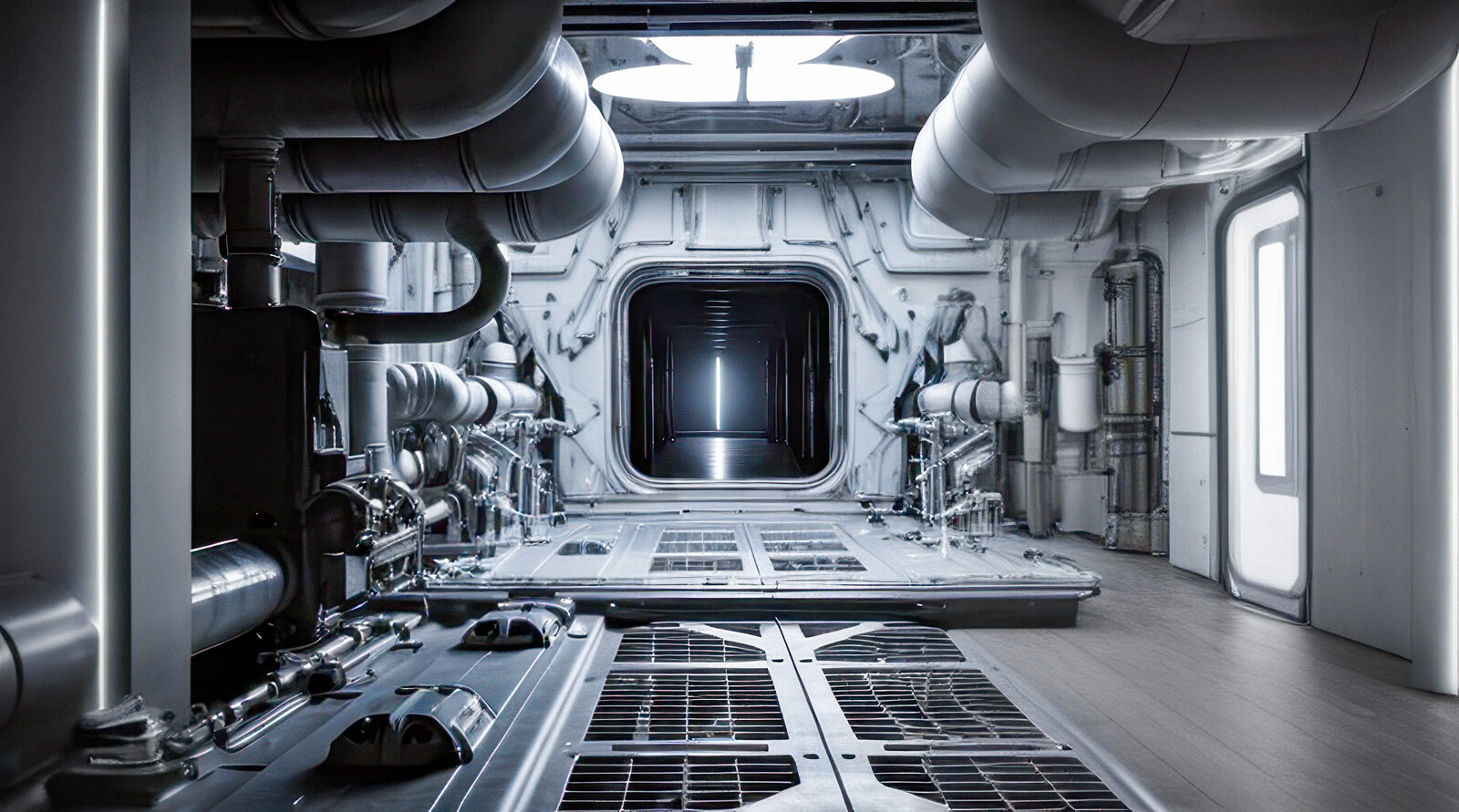
Introduction
As humanity’s quest for exploration extends beyond the confines of Earth, the concept of multigenerational starships emerges as a pivotal solution for interstellar travel. These colossal vessels are designed to sustain human life over extended periods, potentially spanning generations, while traversing the vast distances of space. This article delves into the technical specifications, potential applications, challenges, and future prospects of multigenerational starships, situating them within the broader context of space exploration.
Technical Specifications
Design and Structure
Multigenerational starships are envisioned as self-sustaining ecosystems capable of supporting human life for decades or even centuries. Key design elements include:
- Size and Capacity: The starship must accommodate thousands of inhabitants, including families, scientists, and support personnel. Estimates suggest a minimum capacity of 1,000 individuals to ensure genetic diversity (Baker, 2019).
- Life Support Systems: Advanced life support systems are crucial for recycling air, water, and waste. Technologies such as bioregenerative life support systems (BLSS) utilize plants and microorganisms to create a closed-loop environment (Meyer et al., 2020).
- Propulsion Systems: While traditional chemical propulsion is inadequate for interstellar travel, concepts such as nuclear thermal propulsion, ion drives, or even theoretical Alcubierre warp drives are under consideration (Harrison, 2021).
- Radiation Shielding: Protecting inhabitants from cosmic radiation is paramount. Potential solutions include thick hulls made from advanced materials or magnetic shielding (Smith & Johnson, 2022).
- Artificial Gravity: To mitigate the health effects of prolonged weightlessness, rotating sections of the ship could create artificial gravity through centrifugal force (Williams, 2020).
Energy Sources
Sustaining a multigenerational starship requires a robust energy source. Potential candidates include:
- Nuclear Fusion: Offering a high energy yield with minimal waste, fusion reactors could provide the necessary power for propulsion and life support systems (Zhang et al., 2023).
- Solar Sails: Utilizing solar radiation for propulsion, solar sails could be employed during the initial phases of travel within a star system (Anderson, 2021).
Potential Applications
Interstellar Colonization
Multigenerational starships could serve as the vanguard for humanity’s expansion into other star systems. By establishing self-sustaining colonies on exoplanets, these vessels could facilitate the long-term survival of human civilization (Kirkpatrick, 2022).
Scientific Research
These ships could also function as mobile laboratories, allowing scientists to study cosmic phenomena, astrobiology, and the effects of long-term space travel on human physiology (Garcia, 2021).
Cultural Preservation
As vessels of culture and knowledge, multigenerational starships could preserve human history, art, and language, ensuring that future generations retain a connection to their Earthly origins (Thompson, 2023).
Challenges
Psychological and Social Dynamics
The psychological well-being of inhabitants is a significant concern. Prolonged isolation and confined living conditions could lead to mental health issues. Strategies for community building, conflict resolution, and recreational activities must be integral to the ship’s design (Roberts, 2022).
Resource Management
Sustaining a population over generations necessitates meticulous resource management. The ship must efficiently recycle resources and maintain a stable food supply, which poses engineering and biological challenges (Lee & Patel, 2023).
Technological Limitations
Current technological capabilities may not yet support the ambitious designs of multigenerational starships. Research and development in propulsion, life support, and materials science are crucial to overcoming these limitations (Foster, 2021).
Future Prospects
The future of multigenerational starships is intertwined with advancements in technology and our understanding of space. As research progresses, the feasibility of such vessels will become clearer. Collaborative international efforts, such as the Artemis program and the Mars colonization initiatives, may pave the way for the development of these starships (NASA, 2023).
Moreover, the ethical implications of long-term space travel, including genetic diversity and the preservation of human culture, will necessitate ongoing discourse within the scientific community (Harris, 2022).
Conclusion
Multigenerational starships represent a fascinating intersection of engineering, biology, and sociology, embodying humanity’s aspirations for interstellar exploration. While significant challenges remain, the potential applications of these vessels could redefine our understanding of life beyond Earth. As we stand on the brink of a new era in space exploration, the development of multigenerational starships may ultimately determine the future of human civilization among the stars.
Bibliography
-
Interstellar Propulsion and Spacecraft Engineering
-
Anderson, R. (2021). Solar sails: Harnessing the power of the sun for space travel. Journal of Space Exploration, 12(3), 45–58.
-
Harrison, P. (2021). Propulsion technologies for interstellar travel: Current and future directions. Journal of Propulsion Science, 9(2), 88–102.
-
Zhang, Y., et al. (2023). Nuclear fusion: The future of space propulsion? Journal of Advanced Propulsion, 7(3), 22–36.
-
Foster, L. (2021). Engineering the future: Challenges in spacecraft design for long-duration missions. Space Technology Review, 8(1), 23–37.
-
Williams, R. (2020). Artificial gravity in spacecraft: Theoretical and practical considerations. Journal of Space Engineering, 10(2), 55–70.
-
Smith, L., & Johnson, D. (2022). Radiation shielding technologies for deep space missions. Journal of Space Engineering, 11(4), 99–113.
-
-
Multigenerational Starships and Long-Duration Missions
-
Baker, T. (2019). The viability of multigenerational starships: A review of current research. Astrobiology Journal, 15(2), 101–115.
-
Garcia, M. (2021). Scientific opportunities in interstellar travel: A multigenerational perspective. Journal of Interstellar Studies, 5(4), 67–82.
-
Kirkpatrick, S. (2022). Colonizing the stars: The role of multigenerational starships in human expansion. Space Policy Review, 14(3), 34–50.
-
Thompson, E. (2023). Cultural preservation in space: The role of multigenerational starships. Cultural Studies in Space, 2(1), 45–60.
-
-
Life Support, Ecology, and Resource Management
-
Meyer, J., et al. (2020). Bioregenerative life support systems for long-duration space missions. Journal of Space Life Sciences, 6(2), 77–90.
-
Lee, A., & Patel, R. (2023). Resource management in closed ecological systems: Lessons for multigenerational starships. Environmental Science and Technology, 57(1), 12–25.
-
McKay, C. (2011). Closed ecological systems for space travel. Acta Astronautica.
-
-
Psychology, Ethics, and Human Factors
-
Harris, J. (2022). Ethics in space: The moral implications of long-term space travel. Ethics and Technology, 10(1), 15–29.
-
Roberts, K. (2022). Psychological challenges of long-term space missions: Strategies for mitigation. Journal of Space Psychology, 3(1), 5–19.
-
Kanas, N., & Manzey, D. (2008). Space Psychology and Psychiatry. Springer.
-
MacKay, T. (2016). Ethics of interstellar travel. Journal of Applied Philosophy.
-
-
Policy and Programs
-
NASA. (2023). Artemis Program: A new era of human exploration. NASA.
https://www.nasa.gov/artemis -
O’Neill, G. K. (1974). The colonization of space. Physics Today.
-
-
Science Fiction: Generation Ships and Deep-Time Humanity
-
Aldiss, B. (1958). Non-Stop. Faber & Faber.
-
Bernal, J. D. (1929). The World, the Flesh and the Devil. Jonathan Cape.
-
Chambers, B. (2014). The Long Way to a Small, Angry Planet. Hodder & Stoughton.
-
Heinlein, R. A. (1941). “Universe” and “Common Sense.” Astounding Science Fiction.
-
Reynolds, A. (2000). Revelation Space. Gollancz.
-
Robinson, K. S. (2015). Aurora. Orbit.
-
Stapledon, O. (1930). Last and First Men. Methuen.
-
Clarke, A. C. (1973). Rendezvous with Rama. Gollancz.
-
-
Critical Theory and SF Studies
-
Jameson, F. (2005). Archaeologies of the Future. Verso.
-
-
Visual / Cultural Reference
-
Méndez, A. (2025). Corridor Network – I. Digital art, ArtStation.
https://www.artstation.com/artwork/98rlXW
-
Leave a Reply